
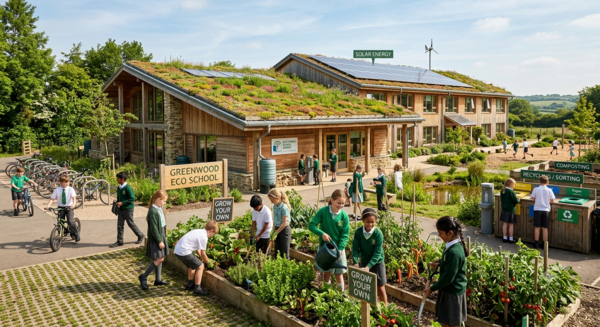
Environment-Friendly School: Building a Greener Future for the Next Generation
In today's world, environmental sustainability has become more important than ever. As climate change, pollution, and resource depletion continue to impact our planet, educational institutions play a vital role in creating awareness and encouraging responsible behavior among students. An environment-friendly school is a school that adopts sustainable practices, promotes environmental education, and creates a culture of conservation and responsibility among its students, teachers, and staff.
What Is an Environment-Friendly School?
An environment-friendly school is an educational institution that actively works to reduce its environmental impact while teaching students the importance of protecting natural resources. These schools integrate eco-friendly practices into their daily operations, infrastructure, and curriculum, helping students develop habits that contribute to a sustainable future.
Environment-friendly schools focus on minimizing waste, conserving energy and water, increasing green spaces, and encouraging environmentally responsible behavior both inside and outside the classroom.
Key Features of an Environment-Friendly School
1. Green Campus and Landscaping
A green school campus includes gardens, trees, and open green spaces that improve air quality and create a healthier learning environment. Schools often organize tree plantation drives and gardening activities to help students connect with nature.
2. Waste Management and Recycling
Environment-friendly schools promote waste segregation, recycling, and composting. Students learn how to reduce waste, reuse materials, and recycle items such as paper, plastic, and metal.
3. Energy Conservation
Schools can reduce energy consumption by using LED lighting, energy-efficient appliances, natural ventilation, and renewable energy sources such as solar panels. These practices help lower carbon emissions and teach students the value of energy conservation.
4. Water Conservation
Rainwater harvesting systems, water-saving fixtures, and awareness programs help schools conserve water. Students are encouraged to use water responsibly and understand its importance as a precious natural resource.
5. Sustainable Transportation
Many eco-friendly schools encourage walking, cycling, carpooling, or using school buses to reduce traffic congestion and air pollution around the campus.
6. Environmental Education
An environment-friendly school incorporates sustainability topics into its curriculum. Students learn about climate change, biodiversity, conservation, renewable energy, and sustainable living through classroom lessons and practical activities.
Benefits of an Environment-Friendly School
Improved Student Health
Cleaner air, greener surroundings, and reduced pollution create a healthier environment for students and staff.
Enhanced Learning Experience
Studies show that students learn better in natural and eco-friendly environments. Green spaces can improve concentration, creativity, and overall well-being.
Environmental Awareness
Students develop a deeper understanding of environmental issues and become responsible citizens who contribute positively to society.
Cost Savings
Energy-efficient systems and resource conservation can significantly reduce a school's operational costs over time.
Community Impact
Environment-friendly schools often inspire families and local communities to adopt sustainable practices, creating a wider positive impact.
How Schools Can Become More Environment-Friendly
- Introduce recycling and waste management programs.
- Organize tree plantation and clean-up drives.
- Reduce paper usage through digital learning tools.
- Install solar panels and energy-efficient lighting.
- Promote reusable water bottles and lunch containers.
- Conduct environmental awareness workshops and campaigns.
- Encourage students to participate in eco-clubs and sustainability projects.
The Role of Students in Creating a Green School
Students are at the heart of every environment-friendly school initiative. Simple actions such as switching off lights when not in use, avoiding single-use plastics, conserving water, planting trees, and participating in recycling programs can make a significant difference. By practicing these habits early in life, students become future leaders who value and protect the environment.
Conclusion
An environment-friendly school is more than just a green campus—it is a place where sustainability becomes a way of life. By integrating eco-friendly practices, environmental education, and responsible resource management, schools can help create a generation that is conscious of its impact on the planet. Investing in green schools today means building a healthier, cleaner, and more sustainable future for tomorrow.