
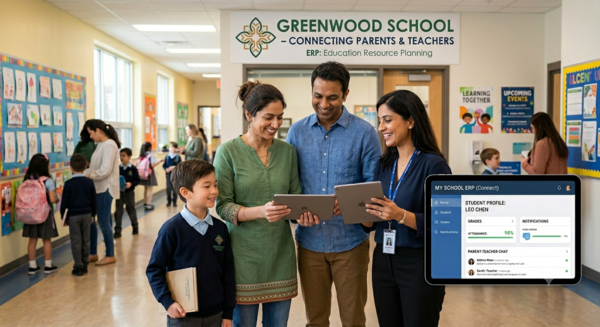
How a School ERP System Connects Parents and Teachers for Better Student Success
In today’s digital education environment, effective communication between parents and teachers is essential for a student’s academic growth. A School ERP (Enterprise Resource Planning) System acts as a powerful bridge that connects schools, parents, and teachers on a single platform, creating a transparent and collaborative learning ecosystem.
The Need for Strong Parent-Teacher Communication
Traditionally, parents and teachers interacted only during parent-teacher meetings, report card distributions, or special events. This limited communication often resulted in delayed feedback and missed opportunities to address student concerns early.
A School ERP System transforms this process by enabling real-time communication and information sharing, ensuring that parents stay actively involved in their child’s education journey.
How a School ERP System Connects Parents and Teachers
1. Real-Time Academic Updates
Teachers can upload attendance records, homework assignments, examination schedules, grades, and performance reports directly into the ERP system. Parents receive instant access to this information through a mobile app or web portal.
This transparency helps parents monitor their child’s academic progress without waiting for periodic school meetings.
2. Instant Communication
A School ERP provides built-in messaging and notification features that allow parents and teachers to communicate quickly and efficiently.
Benefits include:
- Immediate sharing of important announcements
- Quick discussion of academic concerns
- Faster resolution of student-related issues
- Reduced dependence on phone calls and paper notices
3. Attendance Tracking
Parents can receive automatic notifications when their child is absent or late. This feature improves student accountability and helps schools maintain accurate attendance records.
Teachers also benefit by spending less time on manual attendance reporting.
4. Homework and Assignment Management
Teachers can assign homework, projects, and study materials through the ERP platform. Parents can track pending assignments and ensure that students complete their work on time.
This collaborative approach encourages better learning habits and academic discipline.
5. Performance Monitoring
A School ERP offers detailed performance analytics, allowing parents and teachers to identify strengths and areas for improvement.
Features may include:
- Subject-wise performance reports
- Exam result analysis
- Progress tracking dashboards
- Behavioral and activity reports
By accessing these insights, both parents and teachers can work together to support the student's development.
6. Event and Activity Updates
Schools can share information about upcoming events, competitions, workshops, holidays, and parent-teacher meetings through the ERP system.
Parents stay informed about school activities and can participate more actively in their child’s educational experience.
Benefits for Parents
Better Visibility
Parents gain a complete view of their child's academic and extracurricular activities.
Increased Engagement
Regular updates encourage parents to become active partners in the learning process.
Convenience
Important information is available anytime and anywhere through mobile devices.
Faster Decision-Making
Parents can respond quickly to academic or behavioral concerns before they become major issues.
Benefits for Teachers
Improved Communication
Teachers can communicate with parents efficiently through a centralized platform.
Reduced Administrative Work
Automation eliminates many manual tasks such as sending notices and maintaining records.
Better Student Support
With active parental involvement, teachers can address student challenges more effectively.
Organized Information Management
All student-related data remains accessible and securely stored in one system.
Creating a Collaborative Learning Environment
A connected school community leads to better educational outcomes. When parents and teachers have access to the same information and communicate regularly, students receive consistent guidance both at school and at home.
A School ERP System fosters trust, transparency, and collaboration, helping every stakeholder contribute to student success.
Conclusion
The integration of parents and teachers through a School ERP System is revolutionizing modern education. By providing real-time updates, seamless communication, attendance tracking, and performance monitoring, ERP solutions strengthen the partnership between home and school.
As educational institutions continue to embrace digital transformation, School ERP systems will play an increasingly important role in building stronger parent-teacher relationships and supporting student achievement. A connected school community is not just a technological advancement—it is a pathway to better learning outcomes and a brighter future for students.